


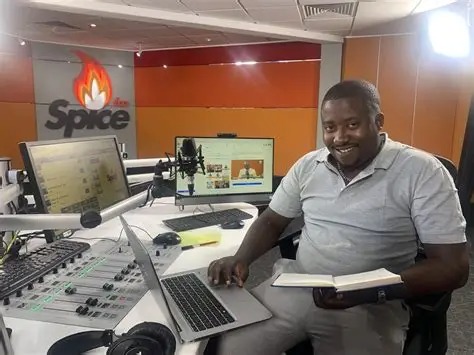

Brian Oduor is a veteran Kenyan radio and TV presenter with more than a decade of experience in broadcasting.
You may remember him from his stint at Nation FM (formerly QFM/Easy FM), where he co-hosted the popular drive-time program “Homerun” alongside Oga Obinna and Dr. Cupid.
He has also worked with other stations, including Urban Radio and Radio Generation.
In a recent interview on the Kisingani podcast, Oduor shared his past struggle with drug addiction and how it almost ended his radio career.
Living a fast life
Oduor said his life began going downhill when he started using drugs such as cocaine.
Although these drugs were expensive, he was earning enough money to support the habit.
“At that time, my radio career enabled me to charge as much as KSh 250,000 for a 30-minute advertisement. I could do about three such advertisements in one week,” he said.
He was in his twenties at that time, living on the proper fast lane.
Oduor, who hails from Buruburu, narrated how his circle of friends was made up of wealthy peers who would buy new cars and board flights to London at the drop of a hat.
He particularly recalled that one of his friends was a pilot who sometimes flew their group to Diani for weekend parties.
These trips exposed him to an environment filled with parties, alcohol, and drugs.
Little did he know that the party lifestyle would gradually develop into a serious addiction.
Addiction Begins Affecting His Work
At the height of his career, Oduor was working at Easy FM and earning more than KSh 500,000 per month.
“I was 25 or 26 at the time. I was not married, so I had fun. I owned about five Subarus, which I used to change almost every day,” he said.
Despite his success, his drug use was becoming more difficult to control. Oduor said he reached a point where he was taking pills so frequently that he operated on “autopilot.”
“I don’t even know how I used to function at work,” he recalled.
As the addiction became worse, Oduor began experiencing frightening withdrawal symptoms and hallucinations.
He also developed suicidal thoughts. At one point, he heard voices telling him to climb a building and jump.
Luckily, he had a supportive family and mentors who urged him to seek rehabilitation.
The Makini school alumnus explained that one of the most difficult parts of recovery is avoiding relapse.
According to him, rehabilitation may help someone stop using drugs, but returning to the same friends, places and habits that supported the addiction can lead them back to substance use.
Today, Oduor says he is more disciplined. Although he enjoys a glass of beer as much as the next man, he closely controls his alcohol consumption so as not to trigger a relapse.
Remembering His Mentor Edward Kwach
Oduor, who is now a father of four, also spoke about the late radio presenter Edward Kwach, whom he described as one of Kenya’s greatest broadcasters.
“Even if people are still listening to radio in the next 200 years, there will never be another Edward Kwach. His personality, talent and way of looking at life were unique,” he said.
Kwach was more than a colleague to Oduor. He was a close friend and mentor who supported him for over a decade. Oduor’s children were so close to him that they called him “Uncle Big Voice.”
“My children used to call him Uncle Big Voice. That is how close we were. We travelled to Kisumu together and went through the COVID-19 period together,” Oduor recalled.
Away from broadcasting, Oduor runs an advertising business that he co-founded with his brother.
The company offers services such as media buying and billboard advertising.