


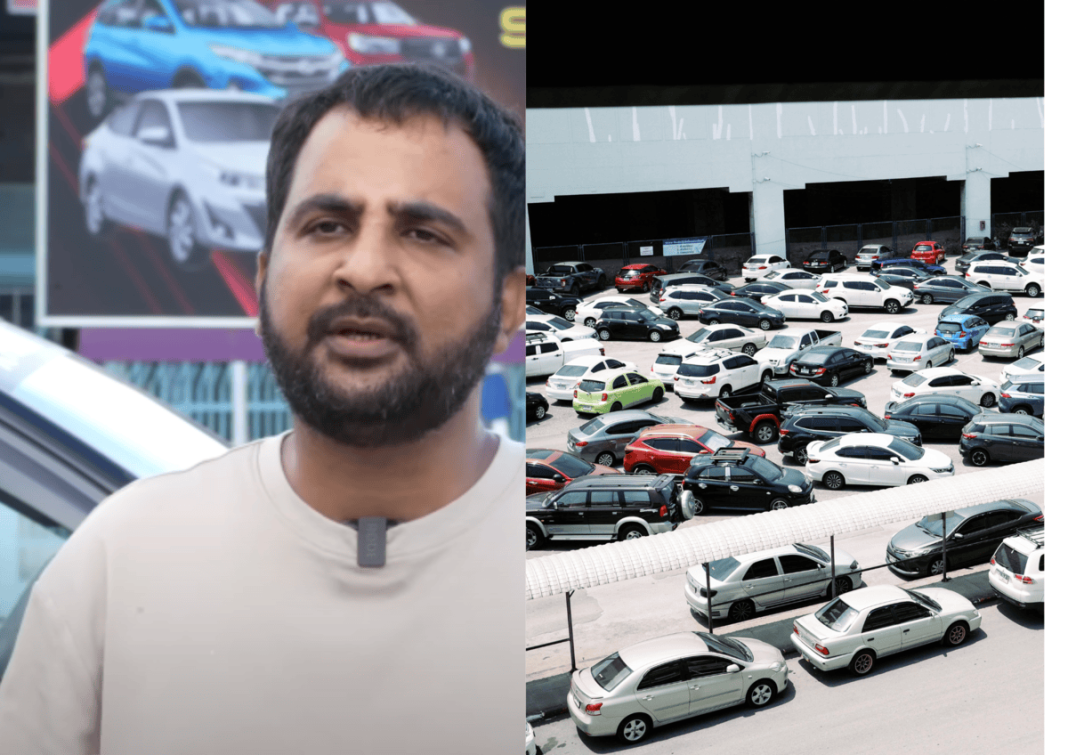

Abdullah Salim is a Kenyan entrepreneur who has found success in the Malaysian automotive industry. From his early start selling a car in high school in Mombasa, his journey led him to Malaysia for his studies in 2008.
While a student, he began selling cars, a venture that has since grown into his own company, Superior Motors. With two yards holding approximately 89 cars, Salim’s story is one of perseverance. As he notes, “business is never easy, you have to have the heart of wanting it.”
This is his journey as told by WOK:
Business Operations in Malaysia
The process for Superior Motors begins with acquiring vehicles from a bidding site in Kuala Lumpur. “After purchasing the vehicles, we ship them to Sarawak,” Salim explained in an interview with Chams Media. “After arrival in Sarawak, we do some detailing, which entails spraying the vehicles if need be. We then resell them in Sarawak.”
The Malaysian car market has three main categories: local Malaysian brands like Perodua and Proton, Japanese cars assembled in Malaysia, such as some models of Toyota and the Mitsubishi Triton, and imported vehicles from Japan.
Salim’s clientele is diverse. “My typical clients are classified into three categories. We have construction companies, low-income earners, as well as palm plantation customers who mostly buy 4x4s and SUVs,” he states. ” The dealership also caters to families in need of MPVs like the Toyota Avanza and Innova.
The Entrepreneurial Spirit: From Mombasa to Malaysia
With 22 years in the business, Salim’s passion for selling cars started early. “I sold my first car in 2003 when I was a form two student. I sold the car to my teacher in Mombasa’s Light Academy,” he recalls. “So, we can say that selling cars is in my blood.”
This entrepreneurial drive continued when he moved abroad for his education. “I relocated to Malaysia to study at Swinburne University,” Salim says. He chose Malaysia for its affordability compared to European countries or the US. He pursued a degree in accounting and an MBA.
During his studies, he began his car-selling venture. “When I moved to Malaysia around 2009, I would buy cars, use them for 2-3 months, and then resell them to fellow students, some of whom were my friends. It was a hobby,” he says.
Before fully committing to the car business, Salim explored other ventures. “I sold cars from 2009-2011, when I decided to venture into other businesses like farming, construction, and restaurants,” he mentions.
After about two to three years, those businesses closed, and he returned to his primary passion of selling cars.
Market Dynamics and Challenges
Currently, Abdullah’s business is thriving, with 4x4s being the most sought-after vehicles, a demand driven by the numerous agricultural plantations in the Sarawak region.
However, the journey has not been without its obstacles. “In the beginning, we had a lot of challenges. However, the only problems we encounter today are normal business problems, such as ensuring the car is in proper condition before delivery to the customer,” Salim notes.
Comparing the Kenyan and Malaysian Markets
Salim finds many similarities in the business practices of Kenya and Malaysia, particularly in the use of social media for advertising.
However, there are key differences in the vehicle transfer process. “In terms of selling a car in Malaysia, the process is a little bit longer compared to Kenya,” he explains.
In Malaysia, a mandatory inspection is required for every transfer of ownership to verify the engine and chassis numbers. “Without the inspection, you are not able to do a transfer of ownership,” he adds. In contrast, “In Kenya, you just need to go through the NTSA portal and you can then transfer ownership without much inspection.”
While the Malaysian process is longer, Salim sees the advantage in its strictness, as it protects the customer from purchasing a vehicle with tampered parts.
Another significant difference lies in the interest rates for car loans. “In Malaysia, interest rates range from 3% to 6% for a used car and 2.2 – 3.1% for new cars,” Salim points out. “In Kenya, the rates are approximately 14% to 19% p.a.”
The cost of vehicles also varies significantly due to import duties and local assembly. A Mitsubishi Triton, for instance, costs around 3.2 million Kenya shillings in Malaysia, whereas in Kenya, the same 2020 model would be approximately 6 million to 6.1 million shillings.
“The duties of Kenya are a little bit higher compared to Malaysia,” Salim observes. “Another thing is the shipping costs, whereby shipping from Japan to Kenya is further than shipping from Japan to Malaysia. Additionally, locally assembled cars are taxed less in Malaysia.”
Expansion into the Kenyan Market
Inspired by his success in Malaysia, Abdullah has expanded his operations to his home country of Kenya, importing cars directly from Japan. “We’ve delivered about 20 units this month,” he states.
Currently, the vehicles are parked at a friend’s showroom in Nairobi and a small showroom in Mombasa, with plans to open their own showroom in Nairobi.
For customers in Kenya, he advises, “If you are buying a normal car which is already inside Kenya, you can view and purchase one from a showroom.” For special orders of cars not readily available, his company can assist. “We only charge 2% for the price of buying the car,” he clarifies.
The process for a special order begins with providing the customer with pictures and the auction sheet of the car, which details its grade and mileage. A 30% down payment is required to proceed with the bid. The remaining 70% is paid upon the car’s arrival in Mombasa, with the duty paid after receiving the draft entry from the Kenya Revenue Authority.
Words of Wisdom
The Mombasa native’s advice to aspiring entrepreneurs is to seize opportunities and be prepared to work hard.
“Business is never easy; you have to have the heart of wanting it. That’s the first thing,” he emphasizes. “The second thing you have to have is the heart of accepting when things are not going well and plan accordingly. Otherwise, you might lose heart and decide to close the business,” he explains.