


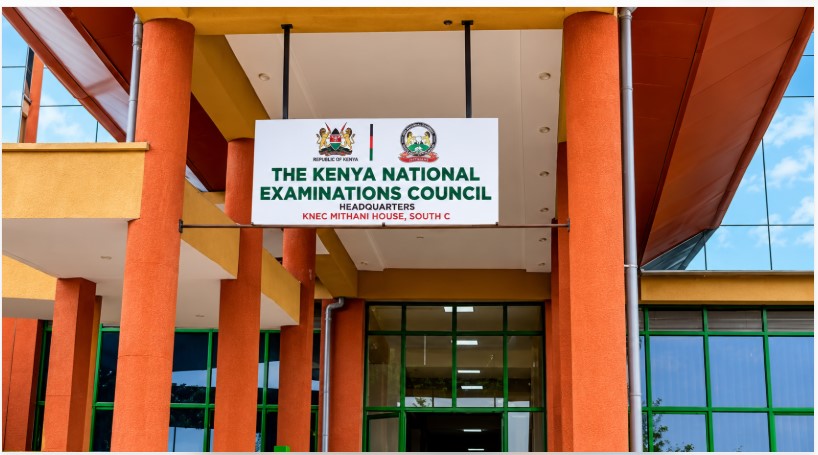

Every year, the Kenya National Examinations Council (KNEC) engages thousands of teachers, police officers, drivers, and other professionals to help administer the Kenya Primary School Education Assessment (KPSEA) and Kenya Junior School Education Assessment (KJSEA) exams.
According to The Star, KNEC deployed 188,979 supervisors and invigilators for the assessments in 2026, alongside 6,215 drivers.
The assessments began on October 26, 2026, with KPSEA scheduled to end on October 28 and KJSEA on October 30.
In this article, WoK provides a breakdown of what KPSEA and KJSEA examinations do and how much they earn.
- Examination Supervisors
Supervisors are responsible for managing examinations at schools and centres where candidates sit for exams.
The work of supervisors is to prepare exam rooms, brief invigilators, confirm the identities of candidates, and oversee the distribution and collection of examination papers.
According to KNEC’s 2024 examination guide, supervisors receive about KSh 680 per day.
2. Examination Invigilators
Invigilators are the teachers who are stationed inside the exam rooms to monitor candidates.
Invigilators are responsible for distributing exam papers, confirming candidates’ details, preventing cheating, and collecting answer sheets.
To become a KPSEA and KJSEA invigilator, one must have served as a primary or junior school teacher with at least three years of teaching experience.
KNEC invigilators are paid ksh 550 daily.
3. KPSEA and KJSEA Centre Managers
Centre managers are the headteachers who are responsible for overseeing assessment activities in their schools.
Their work is to coordinate supervisors and invigilators, collect assessment materials from designated storage containers, and account for those materials after each exam session.
KNEC’s official administration guide also suggests that centre managers are responsible for confirming personnel attendance and preparing the required assessment reports.
They are paid a daily alowance of ksh 550.
4. KPSEA and KJSEA Security Officers
Security personnel are responsible for protecting examination materials during storage and transportation.
These personnel are mainly used to guard exam storage containers and as escorts when examination materials are being transported.
Unlike in previous years when armed officers were stationed outside classrooms, KNEC stated that armed officers would only be stationed at schools in areas that are facing security challenges.
Typically, KNEC pays an allowance of KSh 470 daily to security officers.
5. KPSEA and KJSEA Drivers
Drivers are responsible for transporting examination materials and other KNEC personnel between distribution centres and schools.
Their services are especially useful in remote areas where transporting examination materials can be difficult.
According to The Star, KNEC recruited 6,215 drivers for the 2026 KPSEA and KJSEA exercises.
2024 KCSE guidelines suggest that KNEC pays KSh 455 per day to examination drivers.
6. KJSEA Examination Markers
KJSEA markers are teachers who are recruited by KNEC to assess students’ written answers using marking schemes provided by KNEC.
They are not paid the same rates and allowances as supervisors, with their marking fees depending on the number of scripts they mark.
A report by The Star suggests that examination marking fees typically ranged between KSh 35 and KSh 75 per script.
However, the Kenya Union of Post-Primary Education Teachers (KUPPET) recently called for higher payments, suggesting that examination officials should be paid kSh 4,000 per day, with marking fees increased to at least KSh 100 per script.