
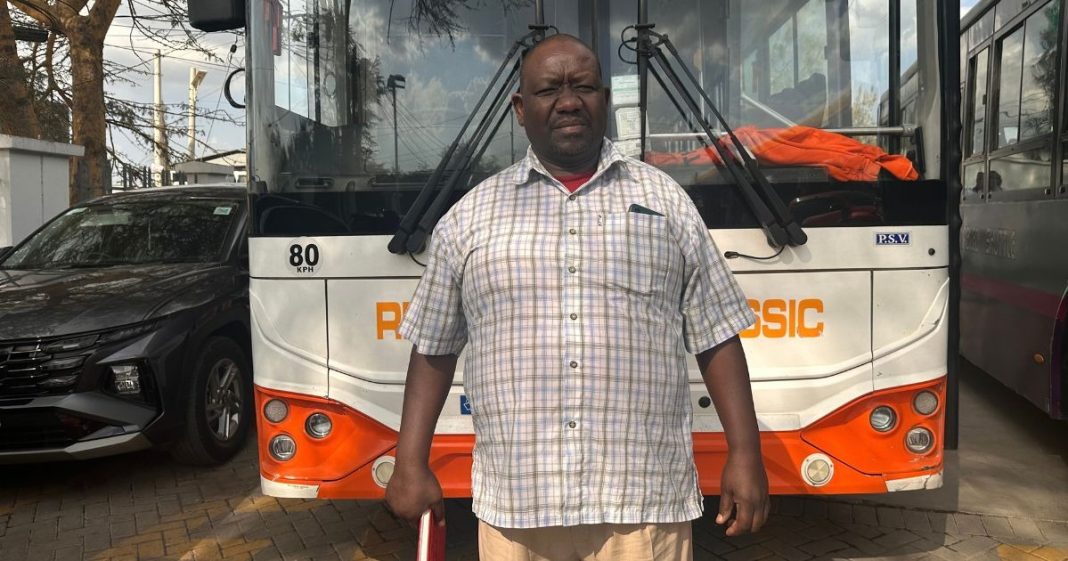

Benson Timothy is the group chairman of Rembo Classic Sacco, a transport company that operates around Nairobi and its satellite suburbs, such as Ngong and Kitengela.
Recently, the sacco decided to introduce electric buses to reduce operating costs and increase profit margins.
“We did our research and found that various investors had already introduced electric buses in Kenya’s transport sector, so we also decided to go for them,” he stated in a recent interview.
Rembo Classic Sacco currently operates four electric buses leased from BasiGo.
According to Benson, leasing an electric bus costs about ksh 1.5 million per month, while the monthly cost of leasing a diesel-powered bus can be as high as ksh 7 million.
Since the buses are on hire, Benson stated that BasiGo is responsible for servicing them, a factor that has maximized Rembo Scaco’s profits.
“Our agreement is that BasiGo does the servicing. However, for diesel buses, we have to service them from our pockets,” he stated.
Servicing a diesel bus can cost as much as KSh30,000 at a time.
Benson noted that fuel is one of the largest expenses faced by public transport operators. “The cost of fuel fluctuates almost every month. So, we went for electric buses because their operating costs are more prediactable than diesel buses,” he stated.
Electric buses do not require diesel. Their chief costs are changing tyres when necessary and charging the buses. According to Benson, the tyres may only need to be replaced once a year, depending on how the bus is used.
Charging an electric bus takes 30 minutes to one hour. A single charge can run for 700 kilometres, which translates to 4-5 hours.
Once the bus begins operating in the morning, it is charged again during the low rush hours of lunchtime, and the charge can last till evening.
The electric buses operated by Rembo Classic Sacco have 37 seats, while the Sacco’s diesel buses generally carry 33 seated passengers.
This gives each electric bus four additional seats. The buses are also designed to carry standing passengers, which increases the Sacco’s profit margins.
In terms of profits, the electric buses outdo their diesel-powered counterparts. While diesel-powered buses can generate daily profits of Ksh 10,000, electric buses can hit daily profits of Ksh 15,000.
“The owner of an electric bus makes about Ksh 200,000 to 250, 000 in profits per month. This is after they have subtracted all the expenses, including paying the driver and conductor,” said Mr Benson
On the other hand, diesel-powered buses bring in monthly profits of about Ksh 150,000.
He added that the drivers and conductors are paid on a monthly basis.
Drivers are paid ksh 1, 500 per day, which translates to Ksh 45,000 per month. On the other hand, conductors are paid KSh 1,000 per day, translating to about KSh 30,000 per month.
Benson stated that Rembo’s electric buses are still new, so the challenges are very few.
Additionally, they sacco is very keen on training and hiring drivers so as to ensure that accidents remain as low as possible.
The buses operate on set schedules and carry specific passengers.
He encouraged other investors in the transport sector to embrace electric means of transport since they are cheaper to operate, require less maintenance, and can generate better returns than diesel buses.