


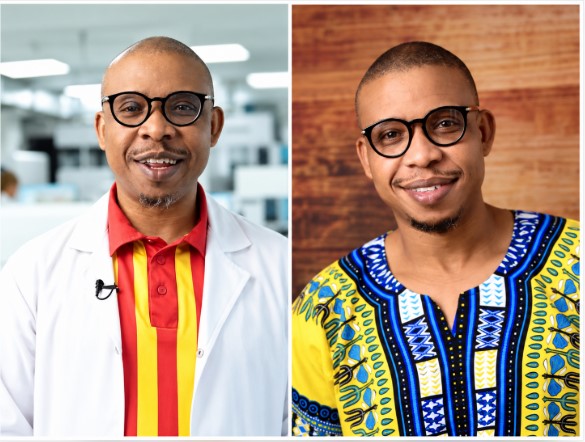

In October 2026, Dr Ahmed Kalebi reached a historic milestone when he became the only Kenyan and African to be inducted into The Pathologist Hall of Fame, one of the highest international honours in pathology and laboratory medicine.
He was also the only person from a low- or middle-income country to receive the recognition.
Data from the World Bank shows that there are roughly 132 low- and middle-income economies (LMICs) in the world today, Kenya being among them.
Dr Kalebi has etched his name among Kenya’s leading experts in laboratory medicine.
He is the founder, CEO, and Principal Pathologist of Dr Kalebi Labs (DKL), a private medical testing laboratory in Nairobi that recently celebrated its second anniversary.
He said that he started the laboratory to prove that advanced medical testing services do not have to come from Europe or America.
They can also be developed in Africa and used to improve healthcare for patients.
Dr Kalebi, who is an alumnus of Jamhuri High School, was born and raised in the Kambi Muru area of Kibera, Nairobi.
He is currently pursuing PhD research at the University of Cape Town in South Africa.
Before being inducted into the Pathologist Hall of Fame, Kalebi had featured six times on the Pathologist Power list, from 2019 to 2026.
The only years that he missed out on the list were 2022 and 2023.
His induction into the Hall of Fame list places him among 50 leading figures in global pathology and laboratory medicine.
He also stands cheek by jowl with some of the world’s best pathologists, such as Prof Christopher Fletcher of the USA, a legendary soft tissue pathologist, and the late Prof Richard Scolyer of Australia, a renowned melanoma pathologist.
Celebrating his recognition alongside Fletcher and Scolyer, Kalebi said, “Finding myself in the same inaugural Hall of Fame as these two extraordinary figures is deeply moving.”
Following the induction, he called for more African experts to be recognized internationally, as well as increased funding for African institutions that offer diagnostic services
What Does a Pathologist Do?
The work of a pathologist is to find out what disease a person has.
You’ll often find them working in a laboratory rather than treating patients directly.
For example, when a doctor suspects that a patient has cancer, they usually send the patient to a pathologist, who examines their tissues to establish whether the disease is present.
Aside from Kalebi, perhaps the most famous pathologist in Kenya is Dr. Johansen Oduor, who has been serving as Kenya’s Chief Government Pathologist since 2013.
Dr Kalebi has spent a large part of his career advocating for increased recognition of pathology as the cornerstone of effective healthcare in Kenya.
In 2021, former President Uhuru Kenyatta awarded him the Order of the Grand Warrior (OGW) in recognition of his efforts and services to the country.
Kalebi is also one of the key figures who were at the forefront of Kenya’s fight against Covid-19, urging people to get tested and get vaccinated.
Becoming a pathologist in Kenya
If you want to become a pathologist, you’ll need to have strong grades, especially in Biology, Chemistry, Mathematics, and Physics.
Your next step will be to pursue a Bachelor of Medicine and Bachelor of Surgery degree, which typically takes 5-6 years.
You’ll then complete a one-year internship program in a public hospital, after which you will enroll in a pathology residency or master’s program, which will take about 4 years.
As a pathologist, you may specialize in areas like forensic pathology, cancer pathology, blood pathology, Pediatric pathology, etc.