


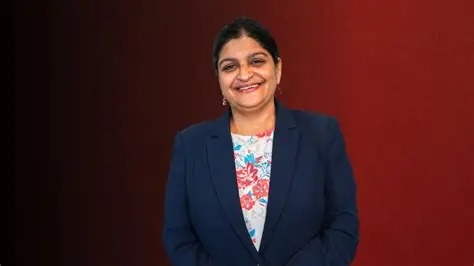

The Dodhia family, who own Thika Cloth Mills Limited (TCM), have greatly impacted Kenya’s manufacturing sector.
They have spent nearly seven decades building one of Kenya’s few surviving integrated textile manufacturers.
Today, the family is best represented by Tejal Dodhia, the Managing Director of Thika Cloth Mills.
Speaking to Citizen TV’s Claire Munene on She Means Business, Dodhia explained that Thika Cloth Mills has been in operation since 1958.
The factory was built by Mahendra Khimasia and his brothers.
Most textile factories established in the 60s and 70s were doing well until the 1990s, when many of them began to crumble under the influx of cheap mitumba imports.
Dodhia recalled reading headlines about factories such as Mounttex, Kikomi and Rivertex, which had faced serious difficulties.
Other factories in Thika, including UTI, Bukko, Kicparu and KTM, also fell by the wayside. “I was 21, 22. At that age, you’re idealistic, and you expect things to not be this way,” she said.
Dodhia’s interest in running the factory began when she landed in Kenya from the UK.
In 2011, her father, one of the factory’s co-founders, passed away, and she was left with the responsibility of keeping the factory operational and ensuring that the livelihood of the workers was not affected.
She approached the Kenya Association of Manufacturers (KAM) and sought meetings with various government leaders, including then Minister of Agriculture William Ruto and Prime Minister Raila Odinga.
These leaders were promoting the Buy Kenya Build Kenya campaign.
At the time, the factory’s main lifeline was the supply of uniforms to private companies, and they began finding ways on how to supply uniforms to the country’s disciplined forces.
In 2012, the then Cabinet Secretary for Industry, Adan Mohamed, visited Thika Cloth Mills to understand the processes involved in textile production and what would be needed to revive the industry.
Among the things they discussed was how the factory could create employment opportunities through cotton farming, garment production, and textile manufacturing.
The Buy Kenya Build Kenya initiative paid off, and Thika Clothing Mills began receiving orders from organisations such as the Kenya Police and the National Youth Service (NYS).
However, getting these contracts was far from easy.
Dodhia recalled producing numerous fabric samples and receiving an order for just 17,500 metres.
When the material was rejected, Dodhia had invested almost Sh100 million in a machine capable of producing high-quality VAT-printed fabric, and the company was on the brink of closing down.
Fortunately, after further inspections and testing, the material passed the required checks, and more orders followed.
The company now supplies locally manufactured uniforms to a wide variety of clients.
The plant runs around the clock for 24 hours a day, with employees working in three shifts to ensure continuous production.
This has facilitated the factory’s production of over 500,000 metres of fabric per month.
Dodhia’s work also involves helping farmers in areas like Siaya and Homa Bay grow cotton for local factories.
She said that although TCM sometimes makes little or no profit from cotton, the efforts will pay off in the long run.
“In the long run, we have now got our source of cotton locally,” she said.
Some of the ways that the factory has reduced operating costs are by investing in solar power.
Its steam boilers also use coffee husks, macadamia shells and cashew nut shells instead of oil.
However, she said that the cost of manufacturing is very expensive, and that some of the machines in the factory costs as much as ksh 100 million.
When asked what advice she would give women in business, Dodhia encouraged them to keep pursuing what they believe is right.
“For me, I think it’s following the light. It’s following the right path. Doing the right thing. Fighting for what is good,” she said.