



In summary
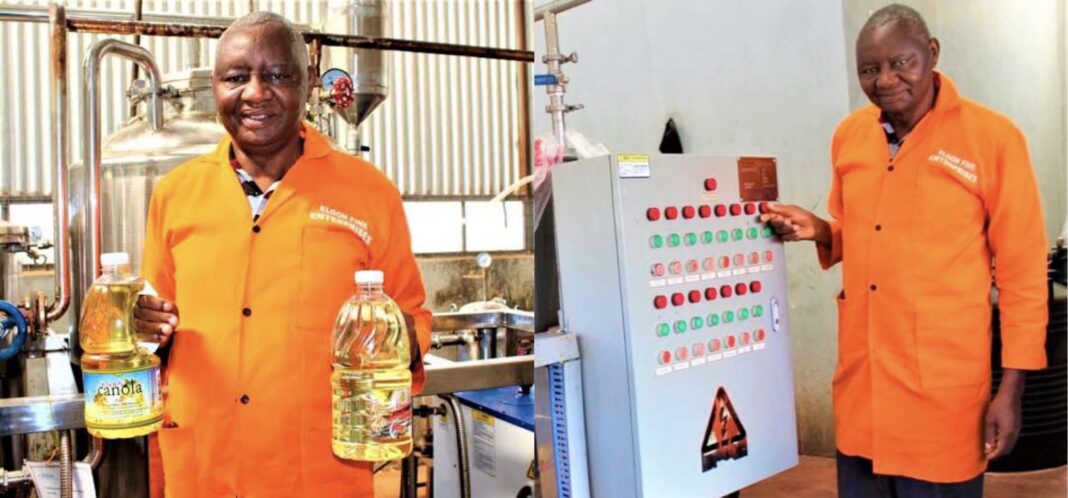
-At its peak, Elgon pine was processing up to 90 tonnes of canola, sunflower and soya annually and was seen as a promising venture. In fact, the proprietor was optimistic of upscaling to 300 tonnes.
-While their monthly power bills averaged Ksh 30 000, they were surprised when Kenya Power slapped them with a Ksh 400 000 bill, a matter that led to the ultimate fall of the project.
Here is the story as told by WoK:-
Humble beginnings
Njuguna worked as a technical manager engineer at the Agricultural Development Corporation (ADC) before his retirement in 2019. For years, he had mastered the process of cold pressing and manufacturing of animal feeds from various produce, albeit on a small scale.
Njuguna decided to upscale his production upon retirement and invested Ksh 16 million into the business which he used to purchase pressing and refining machines.
“I’m now processing 90 tonnes of canola, sunflower, and soya in a year and my goal is to hit 300 tonnes, which is the capacity of our machines,” he said in a past interview.
Njuguna had contracted 100 farmers who supplied him with raw materials although he also grew sunflower and canola on his 10-acre farm.
“The farmers aggregate their produce at specific centers then they call us when ready to go and inspect and collect,” he added.
Other than oil products, Njuguna also made poultry feeds and soap.
“We sell by-products of the crops to those who make livestock feeds and also make some for sale at between Ksh 40 and Ksh 45 per kilo,” he said.
Kenya Power erroneous Ksh 400000 bill
In August 2021, Njuguna was surprised when he was slapped with a Ksh 400000 power bill from Kenya Power. This was a shocker for him given the fact that his bills mostly averaged Ksh 30000 monthly.
This prompted him to file a complaint to the company, remaining optimistic that the dispute would be resolved amicably. However, Kenya Power stated that they had underbilled him for several months and that he had to pay the amount. Njuguna insisted that the bill was abnormal.
In what then led to grounding of operations, Kenya Power then disconnected electricity to both his plant and residence. He complained to EPRA stating that the power to his residence was separate from the plant and pleaded for reconnection. EPRA ruled in his favour but implementation of the reconnection was never implemented.
For a plant that depended on electricity to run its operations, the income channels had been painfully cut off, while his relationship with various farmers and suppliers became frosty.
Energy and Petroleum Tribunal
In 2024, the dispute escalated to the Energy and Petroleum Tribunal which ruled that Kenya Power had failed to satisfactorily justify the disputed bill. It ruled that any monies that had been paid to offset the Ksh 400000 bill be refunded.
However, despite noting that Njuguna had stayed without power for an extended period of time, the tribunal didn’t award damages. It ruled that the losses had not been ‘proven to the legal standards’ required.