

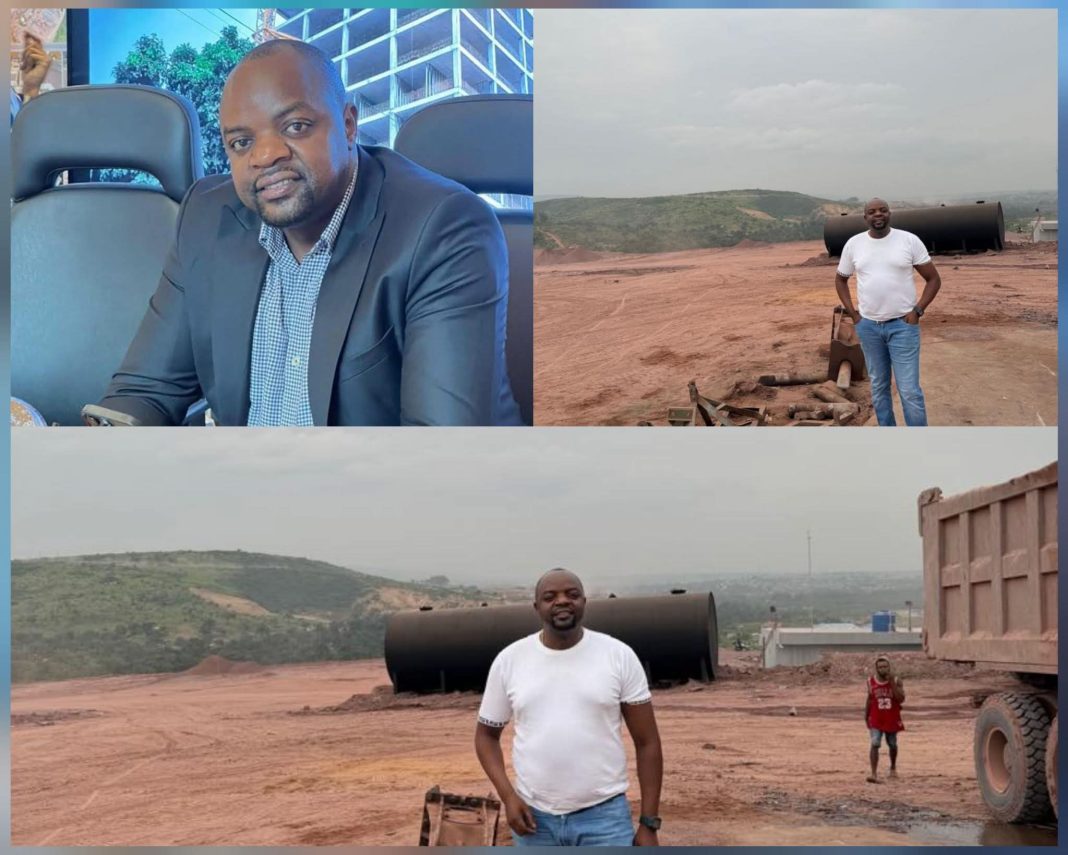

While most Kenyan entrepreneurs hold back from venturing into the Democratic Republic of Congo, Duncan Mogire chose to dive straight in. Today, the Kisii School alumnus is the founder and CEO of Jambo Energy SARL, a petroleum distribution powerhouse making serious waves in Kinshasa and Lubumbashi.
Starting out by supplying diesel door-to-door to businesses dealing with Kinshasa’s erratic power grid, Duncan has scaled the business into a massive operation. Jambo Energy now employs over 70 people and manages fuel storage capacity of 1.4 million litres across the impressive portfolio of customers.
And the future is promising; he is actively expanding his fleet of trucks and river barges to dominate the Congo River transport corridor.
In this exclusive sit-down with WoK, Duncan opens up about his journey from a corporate employee to a sole proprietor, how he navigates the challenges of the Congolese market, and why he believes the youth should focus on mastering their craft rather than chasing quick money.
Hello Duncan, thank you for granting us this opportunity. To begin with, kindly introduce yourself and what you do.
My name is Duncan Mitunda Mogire. I am currently the CEO and founder of Jambo Energy SARL, based in Kinshasa but we have another office in Lubumbashi. We specialize in wholesaling of petroleum products in the DRC.
Are you able to shed some light about your background?
I was born in the year 1985 in Kisii. I went to Primary School in Nairobi and later Joined Kisii School for secondary education where I served as the school captain. I am a graduate from the University of Nairobi and Frankfurt School of Management. For my undergraduate I studied Bachelor of Commerce and for my Executive MBA I studied Finance and Management.
Many Kenyans may be afraid of venturing into DRC. When was your first time travelling there and how did you get to know of the opportunity? Was it easy settling down?
DRC is a big market and the Kenyan business community should not be afraid to explore the available opportunities. DRC is now in the EAC. What many people don’t know is that DRC has 3 different time zones and as such we can classify DRC to be in different regions of Africa within the same country; Eastern Africa, Southern Africa and Western Africa. Most of the war and instability is in the conflict mineral areas of DRC i.e North Kivu and South Kivu.
Though I have worked in the oil industry since 2009, I first came to DRC in 2015 through Dalbit Group. Initially, I experienced cultural shocks and language barrier but with time you get used to the broken Swahili plus Lingala is easy to learn being a Bantu language. In Dalbit Group, I was appointed to head the sales and marketing department at their Lubumbashi branch located in the Southern part. I was tasked primarily to open up fuel sales to the mining companies around the Copper Belt region in Lubumbashi. I quit in 2023 to start Jambo Energy in Kinshasa.
Talking about Jambo Energy, how did you start off?
I started Jambo Energy in 2023 in Kinshasa after quitting employment. We started off by distributing fuel using mobile bowsers to supermarkets and residential houses and offices. Kinshasa has an erratic electricity supply hence all buildings and establishments run on diesel generators.We saw the gap and took advantage and we provided our customers with diesel in a very organised and professional way.
I am sure a lot of Kenyans would want to know about how you got the capital and how much was it if you don’t mind sharing?
I will say that necessity is the mother of invention. I started small with my own savings and over time developed good relationships with our suppliers and the banks. It is difficult to scale up your business without support from either your supplier or the bank.
Do you have other partners?
I am the sole proprietor. I don’t like partnerships because they might slow your growth especially when you are starting from the bottom.
What were the requirements you had to have before inception of your business considering you are from Kenya?
Business registration process in DRC is quite straight forward and it takes less than 5 days if you have all the documents. The main document being the establishment visa.
Do you then mean starting a business in DRC is quite easier than in Kenya? On this, do you think Kenya has something to learn from DRC?
Starting a business in DRC is pretty simpler compared to Kenya due to less bureaucracies – the documentation required and the time to have the company opened.I think Kenya being an economic power house should streamline this process.
A lot of businesses face tough hurdles in the first couple of months or years. What challenges did you face and how did you manage?
Of course all businesses face challenges initially especially on working capital. I personally faced working capital challenges but over time I addressed that by developing good relationship with banks and suppliers. Another challenge is competition – once we succeeded in the venture of door to door delivery to businesses and households, we attracted more competition in the segment leading to reduced opportunities due to scrambling and price wars. Eventually we had to scale up and move to another way of doing the business.
What are your achievements and how many people have you employed?
We employ more than 70 people. At the moment we have scaled up our operations and we have over 20 active customers spread across all segments of the economy. Our value driver is the unique way in which we solve the client needs by installing tanks and pumps at their sites. This has enabled us sign exclusive supply contracts with all our customers. In total we are having approximately 1,450,000 litres in terms of storage across all our customers.
We also have our logistics arm that transports bulk fuel between the port of Matadi and Kinshasa. We are recognised as a major player in the logistics of bulk fuel owing to the impressive fleet we operate.We emphasize on professionalism hence we are a force to reckon with.
We have another arm of our business that does logistics of fuel through the river channel of Congo River. We transport bulk fuel using barges to our customers along the channel.
We also do fabrication of storage tanks which we distribute to our customers sites for storage of products. In some sites like the biggest agricultural enterprise in the whole DRC which deals with palm oil planting and production, we offer both tank farm management and consignment stocking.
Earlier on you talked about being a school captain, do you think the leadership experience you had has helped you in management? And how would you describe your style of management?
My stint in leadership in both high school and university have been crucial especially when you need to stay firm, disciplined and focused amid chaos.
My management styles is anchored on result-oriented management. For a team to achieve specific results for the company, they have to be aware forehand and should at least have the required skills to achieve a given task in whichever department. I give opportunities to all employees to showcase their skills freely provided they are focused on the company goals and targets.
How is your typical day like?
I start my day at 6 am in the office to review all the reports from different departments. I have different face to face meetings on different days of the week.
Most of the day is spent outside the office meeting clients in the field and visiting our yard and garage. I am not an office kind of person.
What is one thing you’re grateful for?
I am always grateful for the opportunity granted to me by my previous employers because without them I would not have known this part of DRC let alone learning how the global fuel market operates. The experience has enabled me navigate smoothly in my entrepreneurship journey.
What is your word of encouragement to young people who would wish to become entrepreneurs? What are the important attributes that they should have?
Entrepreneurship is not an easy journey if you lack resilience, discipline and focus. Young people should venture into businesses that they really have in-depth understanding about. Many youths get into business with an aim of making quick money or they venture into businesses that are perceived to make quick money but I say – master your art and money will flow.
What is the future of Jambo?
In the short term, we plan to consolidate our wins within DRC by nurturing a formidable team that will enable us move to the next level of the business which is bulk importation of fuel through the main supply corridors i.e Matadi port, Beira Port and Dar Es Salaam. We further plan to beef up our fleet with more trucks for long hauling of bulk product. In a few years we should dominate the logistics space. As per the river channel logistic by barges, we will in mid 2027 acquire a barge of a capacity of 1,000,000 Litres and this will stamp our authority as the King of River Congo for transport of bulk fuel. Southern DRC remains a strategic market for us as we seek to take up more volume from the mining companies in the copper belt region.