



In summary
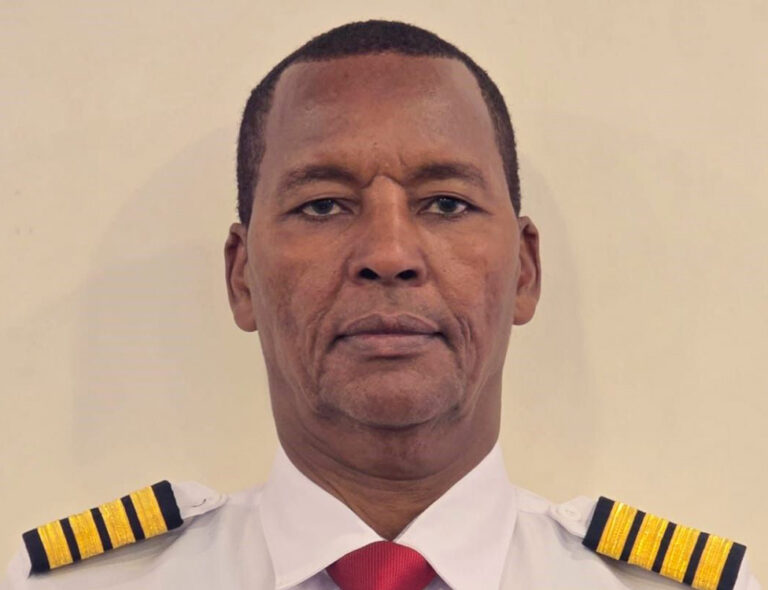
•Anshuur Hussein is a co-owner of Bluebird Aviation and revealed how they once successfully organised a secret mission to return the body of former Somalia ruler back home. Not even powerful government, or members of the security council knew that they had flown outside the country.
In January 1995, former Somalia ruler Siad Barre died while in exile in Lagos, Nigeria. But returning his body back home proved to be a significantly challenging task for the family.
Barre had ruled Somalia for over two decades before he was driven out of power in 1991. During his reign, there were reports of human rights abuses.
He initially fled to Kenya. However, pressure mounted from parliament and various human rights organisations made Barre’s stay to be short-lived. He eventually sought asylum in Nigeria where he stayed for four years before he succumbed to diabetes.
Two Kenyan pilots, Nigerian diplomats and a secret mission
While Barre’s family sought the intervention of the Nigerian Air force to return the body home, the plan hit headwinds. They were told that the intended airstrip in Somalia had a small runway that couldn’t accommodate their military plane.
Given the Islamic traditions that require prompt interment, another plan had to be quickly devised and executed.
A Nigerian diplomat knocked on the door of Bluebird Aviation at Wilson Airport and informed the owners of the lucrative albeit risky deal. Captain Anshuur Hussein and Adan were told to secretly charter a flight to bring back the body – and not even government officials were supposed to know about it.
The risk was that the consequences would be dire if President Moi’s officials knew about it and it could lead to a diplomatic fallout.
“We knew immediately this wasn’t a normal charter…If the Kenyan authorities found out, it could have caused serious problems,” Anshuur told BBC.
However, the duo asked the diplomat to give them time to debate on it, promising feedback the following day. The mission was said to come with a generous financial reward, kind of a jackpot, though the exact figure remains under tight wraps.
Accepting the offer
The following day, the two pilots accepted the offer but on conditions that if anything went south, the Nigerian Government had to take responsibility. Additionally, they demanded to have two embassy officials on the flight.
On 11th January 1995, at around 3 am, the Beechcraft King Air B200 took off from Wilson Airport with the filed flight manifest indicating it was destined for Kisumu. When they got close to Kisumu, the pilots switched off the radar and took the direction to Entebbe, Uganda. Anshuur revealed that at the time, radar coverage across much of the region was limited, a gap the pilots knew they could exploit.
While in Entebbe, the two embassy officials were told not to disembark. The pilots told the airport officials that they had jetted from Kisumu and were on their way to Yaoundé. They refueled and resumed the journey. There was a brief stopover at Yaoundé before taking the route to Lagos.
Before entering the Nigerian air space, the pilots were advised by Nigerian government officials to use the Nigerian Air Force sign ‘WT 001′ to avoid any suspicion.
They arrived at 1 PM and met Barre’s family. Arrangements for a return trip were then organised and set for the following day. The following day, the casket was loaded on to the aircraft. Two Nigerian Government officials and six family members boarded the aircraft.
From the pilots’ perspective, secrecy was crucially important.
“At no point did we tell airport authorities in Cameroon, Uganda or Kenya that we were carrying a body,” Anshuur told BBC.
The aircraft retraced its route, stopping briefly in Yaoundé before flying to Entebbe, where it refuelled. While in Uganda, the authorities were deceived that the final destination was Kisumu in Kenya. However, the plane took the route to Garbaharey, southern Somalia.
The pilots attended the burial ceremony and returned back to Kenya. While at Wilson Airport, they said that they had returned from Mandera, giving the impression that it was a local flight.
“No-one asked questions, that’s when we knew we were safe,” Anshuur told BBC.