



In summary
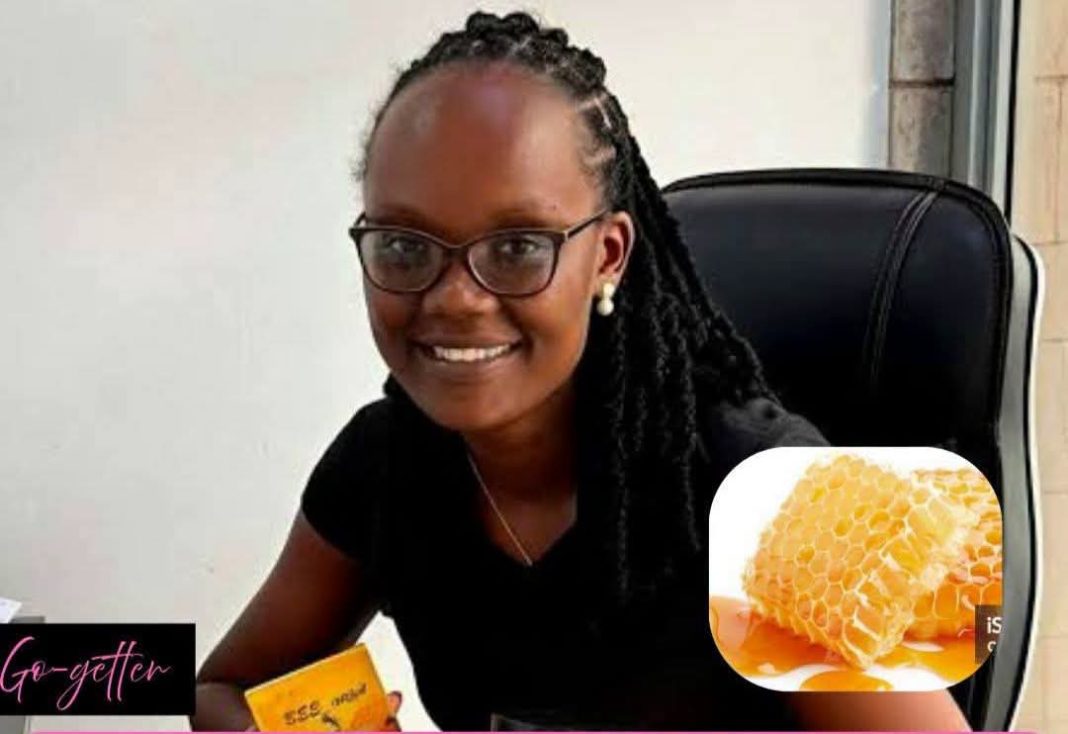
-Joan Muthui is a pharmacist who enrolled at the Lenana Institute of Beekeeping in 2024 and learnt that beeswax, the by-product that remains after extraction of honey could be used to make skincare products.
-With the help of her former lecturer, she immersed herself into deep research. Initially, her products got a thumbs down after she received feedback that it was too harsh and irritating.
*****
Joan Muthui is the brains behind Beesplash Limited, a company specialising in manufacturing organic skincare products from beeswax. From an initial disappointment to receiving daily orders, and having her products recommended by dermatologists, Joan’s journey is truly inspirational.
Here is the story as told by WoK.
Working as a pharmacist
Joan is a pharmacist and for many years, she had witnessed patients suffering from various skin ailments having to buy medications again and again. This was in the long-term expensive given the conditions took long periods to resolve.
“Anything relating to the skin is not a one-day thing. You take a drug for diarrhea and it stops (but for the) skin it is a journey – it can take a year, two years, three years. You see people becoming frustrated with unending issues,” she says.
In 2024, she enrolled for a short course at the Lenana Institute of Beekeeping and learnt that beeswax could be used to manufacture organic skincare products.
Later that year, she met her previous lecturer who was by then producing his own organic soap. The reconnection reignited Joan’s long held aspiration to take on the same path.
Receiving help from the lecturer
Working like clockwork, they researched and formulated lip balms, soap and moisturiser using four core ingredients: bees wax, shea butter, honey and essential oils.
She used the Mount Kenya University Thika campus laboratory for a sterile and controlled production. She then tested the initial products on her sisters and pharmacy colleagues.
She received negative feedback that the product was too harsh and irritating. With unbridled determination, she reached out to the lecturer and they worked on improving their formulation. They got it right the second time.
Licencing and commercialisation
Prior to commercialisation, she needed approvals from the Kenya Bureau of Standards (KEBS) and the Pharmacy and Poisons Board. It was a long wait but luckily she wasn’t extorted. Finally, she was able to secure the licences.
Rotary fair and having her products prescribed
In January 2025, Joan went for a rotary fair and paid for a stand. By the end of the day, her moisturisers had earned her a cool Ksh 9600.
“What? You mean it’s working?” She recalls thinking. “I have never looked back,” she says.
One day while working in the pharmacy, she received a pregnant woman who couldn’t afford the moisturiser she needed. Joan took the opportunity to offer her product as an alternative. She asked the woman to return if it did not work.
It was good news that the patient returned confirming that the body butter had stopped the itchiness that had troubled her. She then approached various gynecologists recommending the moisturiser as something that could work for expectant mothers with skin irritation. This saw at least two dermatologists prescribe the product.
“Seeing my product on a prescription from a dermatologist made me feel so good. That is when I knew this was real,” she says.
Making more sales
Though she currently doesn’t have any export structures, she has seen her products land in South Africa, United Kingdom and United States through international rotary delegates.
Currently she manages to make at least three to five units sales a day to 30-50 units on a good day.