Osborne Wainaina: Meet Murang’a Student Making Drones for Aviation Schools, Air Travel Industry

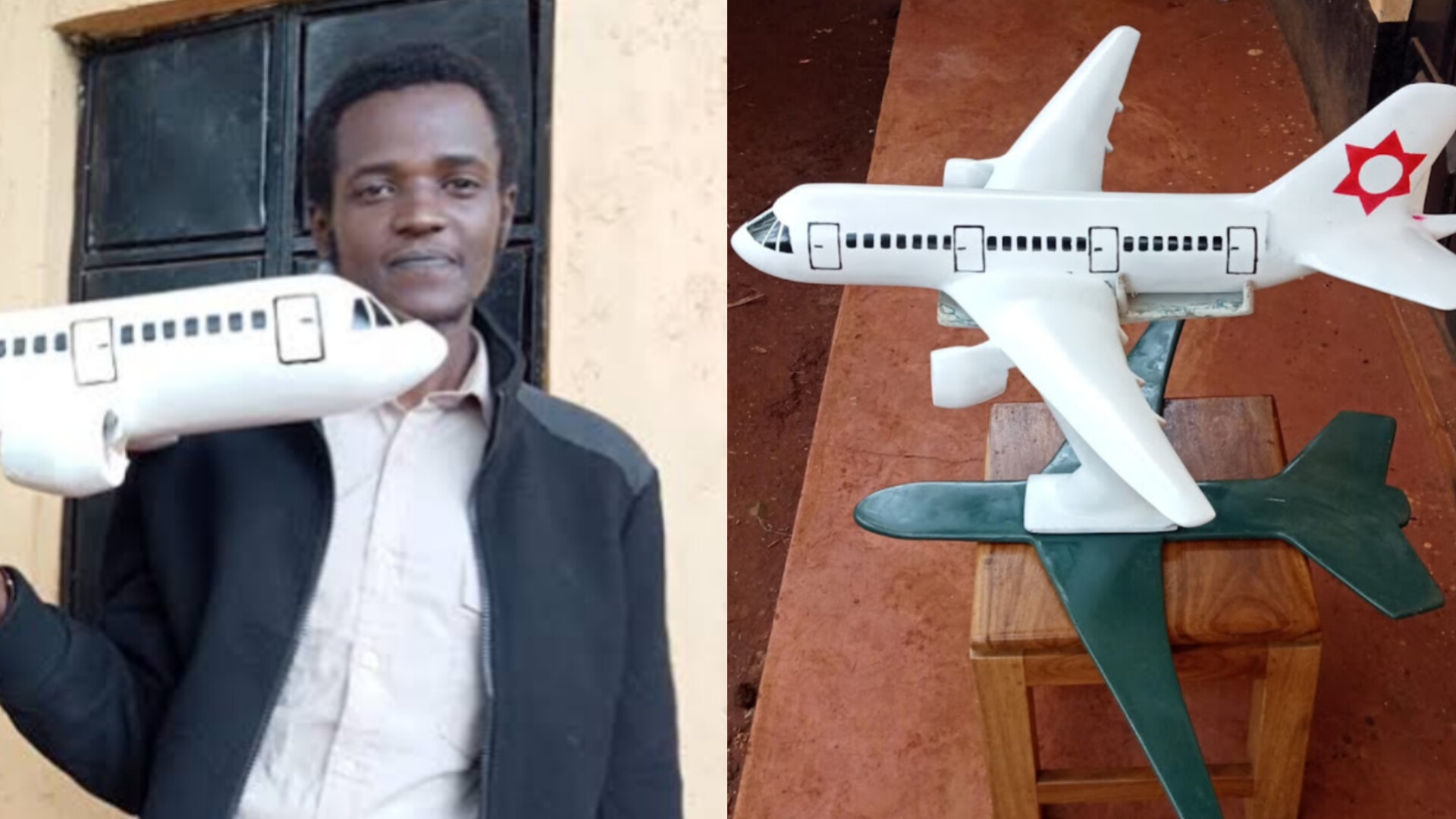
Osborne Wainaina, a resident of Kiharu, Murang’a has made a name for himself by making model airplanes and drones used for illustration purposes in aviation schools.
In an interview, he detailed that he developed an interest in aircraft while growing up as he was fascinated with how they operate.
As such, Wainaina later joined an aviation school to become a plane mechanic but he later learnt that the school did not have model planes.
Stunned by this fact, he committed himself to making model plans for aviation schools to make learning more interesting and make students understand better.
Wainaina began producing high-quality model planes that aviation schools purchased, setting off an entrepreneurial venture for him.
He later received positive feedback from other pupils, who expressed how much the model planes benefited their learning.
Wainaina has so far created six drones, some of which are utilized for photography and delivery, while others serve a variety of functions.
“I am thinking about how to install a parachute system in this one so that the camera does not get damaged when the drone fails,” he said.
In an interview, Wainaina noted that after finishing his studies, he plans to develop more efficient and dependable drones and model planes for commercial use.
He also noted that he intends to build a military drone, which he says will take approximately two weeks if the resources are available.
However, with other factors such as testing to ensure efficiency considered, the process will take roughly two months.
“The first step is for you to do what you can with what is available. This was a room that I turned into a workshop. Most dreams are never actualised when you wait for help,” he stated.
According to Wainaina, some of the challenges he faces include lack of the right materials locally and the high cost of locally available parts.
He shared that some parts go for as high as Ksh 50,000.