


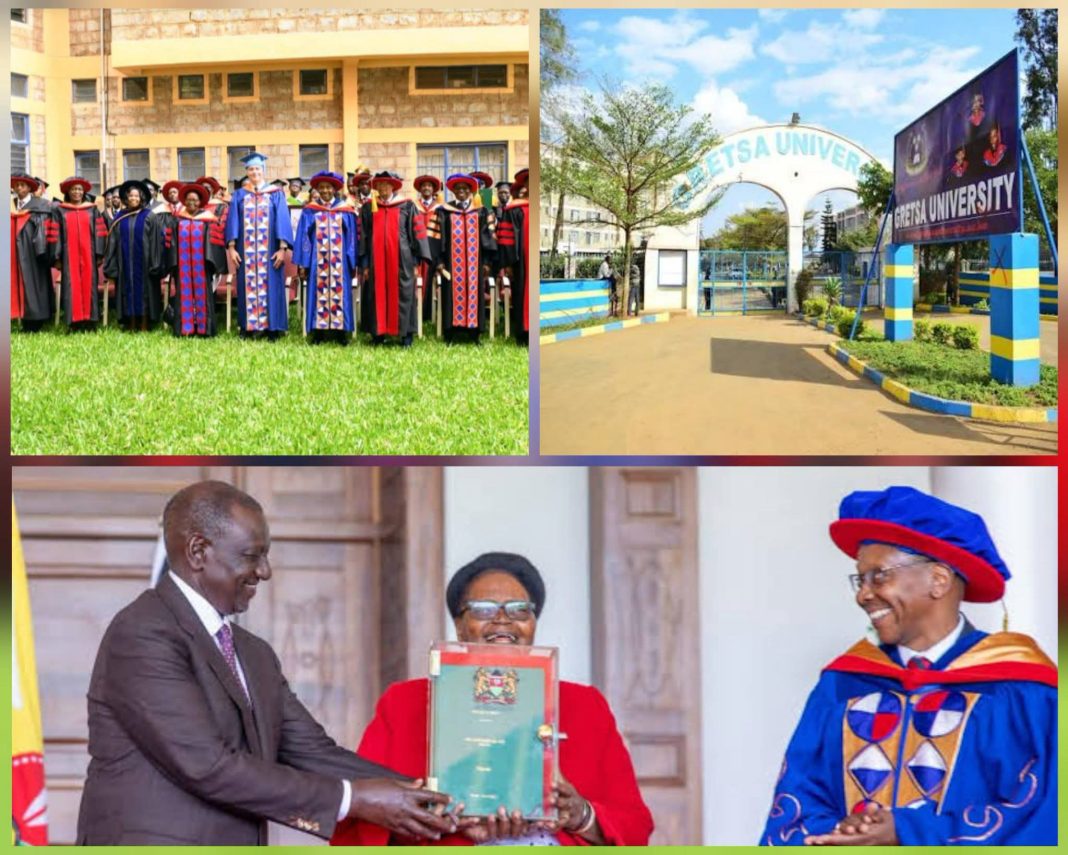

In summary
-Kibathi was so kind-hearted that he once bought a 9 acre piece of land through auction, but he gave it back to the troubled family, without any conditions.
Have you ever realised that the acronym of the names ‘Gretsa’ and ‘Sagret’ are more less the same. This is because the founder, Samuel Kibathi dearly loved his wife, Margaret Kibathi hence incorporated her name into these investments.
Gretsa is simply derived from the name Margaret and Samuel.
But who was Samuel Kibathi and how did he build his multimillion investments?
Humble background
The late Samuel Kibathi was an ex British American Tobacco who resigned from his role, to the surprise of his friends. He worked as a maintenance electrician but called it quits in order to rear chicken.
Talking of humble beginnings, he didn’t even have a proper structure. In fact, the roofing of this project was made of polythene. When the chicken began laying, he would use his bicycle to sell the eggs in Ruiru.
In the early 60s, he used the profit from his agricultural venture to buy land in Nakuru.
Moving to Nairobi
Between 1964-1969, he worked as farm manager in a co-owned venture. He then established Fallow Dry Cleaners in Nakuru.
The enterprising Kibathi then moved to Nairobi and incepted a zipper manufacturing company. It was named Pigeon Slide Zippers and at its peak had 200 employees.
During this time, second hand clothes were not the norm, hence the boom in business. There was a big demand for the zippers from Nairobi tailors. However, his venture closed shop in 1984 after the rapid influx of mitumba which pushed the business to a halt.
Establishing Gretsa University
In 1990, the enterprising Kibathi bought a 5 acre piece of land which would be used to build Gretsa University. It was until 2006 that the institution admitted its first 6 students.
The reason he incepted Gretsa University was because of the need for Kenyan students to access quality education, without being ‘culturally displaced’ as would be the case if they studied abroad.
“My father wasn’t happy with the type of education Kenyans were getting from private universities abroad. After sacrificing a lot to send them abroad for studies, parents got children who were culturally displaced. This made him start a university, an option for such parents, locally,” says son Humphrey Mwaura.
Sagret Hotels
Kibathi diversified into the hospitality sector and opened Sagret Nairobi on River Road in 1981, and followed it up with Sagret Equitorial in 1985 in Milimani.
He then expanded out of Nairobi to Thika where he established another hotel, Thika Farmer’s Hotel.
Death
Samuel Kibathi died in October 2011 while receiving treatment in India. His estate is currently managed by the larger Kibathi family.