

If you walk down the streets of Nairobi or any major city, you’ll see brands that are part of Kenya’s psyche.
We’ve grown up with them, we bank with them, and we shop at their aisles every weekend. There is a certain pride in seeing a brand grow from a small shop in a village to a multibillion-shilling empire.
But here is the “tea”: many of these companies—the ones we consider our national heritage—are no longer fully Kenyan owned. In fact, some aren’t even majority-owned by Kenyans anymore. Driven by the need for massive capital and global expansion, our local giants have become the playground for foreign private equity firms and multinational conglomerates.
WoK pulls back the curtain on the multibillion businesses that are “Kenyan by face” but “Foreign by pocket.”
Naivas Supermarket
For the longest time, Naivas was the ultimate “Hustler” story. Founded by the late Peter Mukuha Kago, it rose from a small shop in Naivasha to become the undisputed king of Kenyan retail after the messy collapse of Nakumatt and Tuskys.
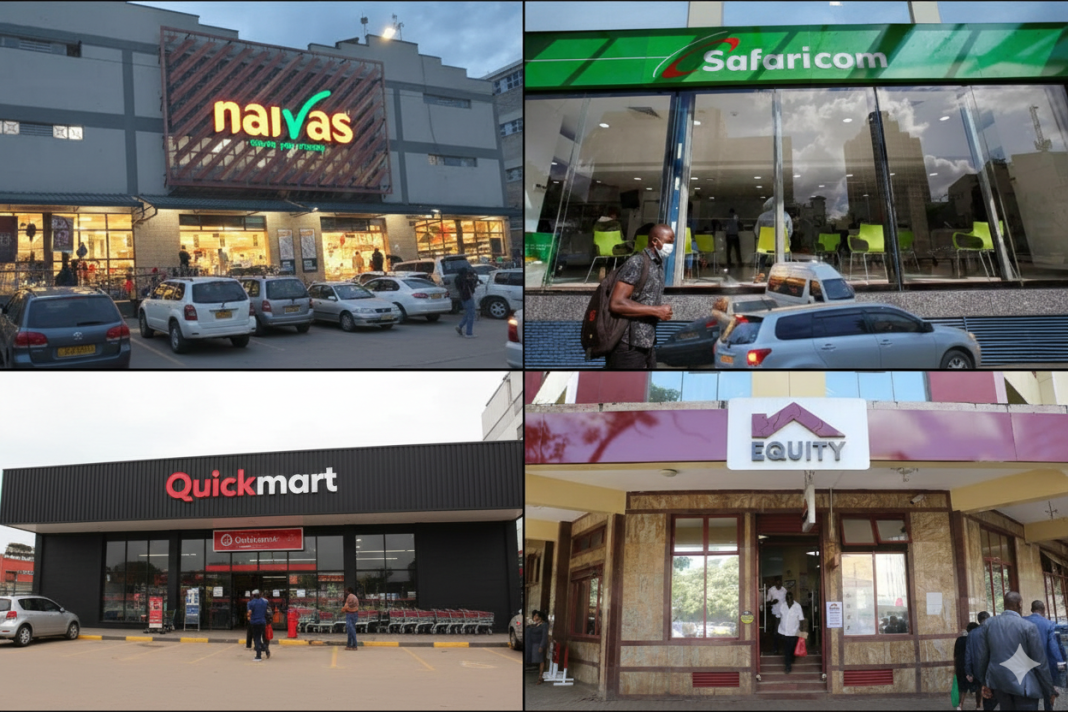
The Reality: While the Mukuha family is still very much involved, they are no longer the majority owners. In 2023, a consortium led by the Mauritian conglomerate IBL Group upped its stake to 51%. This officially made Naivas a foreign-controlled entity. If you’ve noticed more aggressive expansion lately, now you know the deep pockets behind it.
Java House
Whether it’s a business meeting or a “first date” spot, Java House is the quintessential Nairobi coffee shop. It feels as Kenyan as a plate of nyama choma.
The Reality: Java was never actually Kenyan-founded. It was started by two Americans, Kevin Ashley and John Wagner, in 1999. Since then, ownership has changed hands like a hot potato—moving from Emerging Capital Partners (USA) to Abraaj Group (Dubai), and finally to Actis (UK). Most recently, it was acquired by Alterra Capital Partners. It’s a global brand that just happens to love Kenya.
Safaricom PLC
This is the one that hurts most people’s pride. Safaricom is the “Motherboard” of the Kenyan economy. With M-Pesa basically running our lives, we often treat Safaricom as a state-owned parastatal.
The Reality: The Government of Kenya only owns 35% of Safaricom. The real power lies with Vodacom (South Africa) and Vodafone (UK), who together control 40%. The rest of the shares are traded on the Nairobi Securities Exchange (NSE), and a huge chunk of those are held by foreign institutional investors. So, while Safaricom is “The Heart of Kenya,” a lot of the blood (profit) flows south and to Europe.
Equity Group Holdings
Dr. James Mwangi has done an incredible job branding Equity Bank as the “Bank of the People.” It started as a building society for farmers in Central Kenya, and that local grassroots image has stuck.
The Reality: Equity is a global multinational now. The single largest shareholder is Arise BV, which is an investment vehicle owned by the Dutch and Norwegians (Norfund, Rabobank, and FMO). While Dr. Mwangi remains the face and a significant individual shareholder, the “big money” behind the scenes is very European.
Brookside Dairy
Brookside is practically synonymous with the Kenyatta family. It is the dominant force in the milk industry, and most Kenyans assume it’s a 100% “First Family” business.
The Reality: Back in 2014, the French food giant Danone bought a 40% stake in Brookside. This was a strategic move to help the company expand across Africa. While the Kenyattas still hold the majority, the French have a huge seat at the boardroom table.
Quickmart Supermarket
Just like Naivas, Quickmart started as a family business. It was founded in 2006 by the late John Kinuthia in Nakuru and remained a family-run operation for over a decade.
The Reality: In 2019, the Kinuthia family ceded control. Adenia Partners, a private equity firm headquartered in Mauritius, acquired a majority stake in Quickmart. They didn’t stop there; they also owned Tumaini Self Service and merged the two under the Quickmart brand.
Today, while the Kinuthia family still holds a minority stake, the multibillion-shilling retailer is controlled by Sokoni Retail Kenya, which is a subsidiary of the Mauritian-based Adenia Partners.